


How to repair leaking tees in utility system pipes on offshore platforms? Benefits of using stainless steel leak repair clamps
Can stainless steel pipe elbows be welded if they are leaking? What are the advantages of using leak repair clamps?
In the high-risk, highly corrosive environment of an offshore platform, repair work requires adherence to strict safety procedures and standard operating procedures. Common methods for repairing a leaking tee include:
1. Preparation and Safety Assessment
Isolate the system: First, isolate the system containing the leaking pipe. This involves closing upstream and downstream valves, depressurizing the system, and draining the pipe of the media (which could be water, chemicals, oil, or gas). This is the most critical safety step.
Risk Assessment: Conduct an operational risk assessment and obtain permits for hot work and confined space operations. Determine the nature of the leaking media (whether it is flammable, toxic, or hot).
Surface Preparation: Thoroughly clean the pipe surface around the leak, removing paint, rust, salt crystals, and oil stains until the natural metal color is exposed. This is crucial to the success of any repair method.
2. Common Repair Methods
Welding: This is the most traditional and reliable method for permanent repairs. However, its disadvantages are that hot work is required, which is extremely risky in the flammable and explosive environment of an offshore platform. The approval process is complex and may even be prohibited in some cases. Furthermore, it requires skilled welders and significant time. Using epoxy or sealing tape: This is a temporary, emergency measure. Fast-curing epoxy mastic or specialized sealing tape is applied directly to the leak. This method is not resistant to high pressure and long-term corrosion, and is typically used only to buy time for more thorough repairs. It is not recommended as a long-term solution for offshore platforms.
Using a pipe clamp: This is a simple mechanical repair method that tightly seals the leak with a metal clamp with a rubber gasket. It is more reliable than mastic, but is typically used for straight pipe sections and often lacks sealing effectiveness for complex pipe shapes like tees.
Using a stainless steel leak repair clamp: This is currently the most recommended, commonly used, and reliable solution for this type of problem.
Benefits of Using a Stainless Steel Leak Repair Clamp
Stainless steel leak repair clamps (commonly called "pipe repair clamps" or "pipe repair clamps/sleeves") are mechanical devices designed specifically for quickly repairing pipeline leaks. For offshore platform tees, a dedicated tee repair clamp is the best choice. Its advantages are significant:
1. No flames are required, making it extremely safe.
This is its greatest advantage. The entire installation process is performed entirely cold, eliminating the risk of explosions and fires associated with hot work in hazardous areas, streamlining the work permit approval process and significantly improving the overall safety of the platform.
2. Fast Repair, Minimized Downtime
The leak repair clamp's design allows for extremely fast installation. From surface preparation to installation, it can typically be completed within a few hours. Compared to welding, which requires lengthy preparation steps such as isolation, inerting, and testing, this significantly reduces system downtime, allowing for a quicker resumption of production and significant economic benefits.
3. Excellent and Reliable Sealing
High-quality leak repair clamps utilize a dual-seal design: A food-grade or industrial-grade, oil-resistant, and corrosion-resistant rubber seal (such as NBR or EPDM) is embedded within two semicircular clamps. These seals are precisely pressed against the leak site.
Tightening the high-strength bolts on both sides generates pressure that fully deforms the seal, tightly fitting the complex tee surface, creating a 360°, all-around seal capable of withstanding high system pressures. 4. Excellent Corrosion Resistance
The leak repair clamp body is made of 316/316L stainless steel, offering exceptional rust and corrosion resistance. It perfectly withstands the harsh, corrosive environment of high salt and humidity at sea, ensuring long-term durability after repair.
5. High Structural Strength and Mechanical Protection
The stainless steel outer shell not only acts as a seal but also as a structural reinforcement, providing additional mechanical support and protection for severely corroded or thinned pipe walls, extending the service life of the fitting.
6. High Adaptability
A variety of standard sizes and models are available, specifically designed for different pipe fittings, such as tees, elbows, and straight pipes. Choosing the right model and size ensures a perfect fit for tees, resolving sealing challenges posed by their complex geometry.
7. Reusable
Many high-quality leak repair clamps can be reused during subsequent repairs or modifications, provided they are carefully disassembled and inspected, offering a cost-effective solution.
Instructions (Using a Stainless Steel Tee Leak Repair Clamp)
1. Safety Preparation: Isolate the system, depressurize, drain, and obtain relevant work permits. 2. Surface Preparation: Thoroughly polish and clean the leaking area of the tee and the surrounding pipe walls to ensure they are free of any impurities.
3. Place the Sealing Strip: Sometimes, it is necessary to place the included sealing strip at the specific location of the leak.
4. Install the Leak Repair Clamp: Snap the upper and lower (or left and right) halves of the leak repair clamp onto the tee, aligning and inserting all bolts.
5. Tighten Evenly: Using a torque wrench, tighten all bolts gradually and evenly in a diagonal sequence until the specified torque value is reached, ensuring even stress distribution and a complete seal.
6. Pressure Test: Slowly restore system pressure and check the leak repair clamp for leaks. If there is a slight leak, tighten the bolts slightly further.
The housing is typically made of metals such as ductile iron and carbon steel, which are corrosion-resistant and high-strength. It can last the same life as the original pipe, eliminating the need for frequent repairs. Baoshuo brand carbon steel half joints are available in a variety of rubber materials, including NBR, EPDM, FKM, and silicone rubber. The half joint body is available in Q235 carbon steel and 304 and 316L stainless steel.
The following are Baoshuo brand oil-resistant pipe repair clamps, high-temperature-resistant pipe repair clamps, acid- and alkali-resistant pipe repair clamps, stainless steel pipe repair clamps, high-pressure-resistant pipe repair clamps, and large-diameter pipe repair clamps.


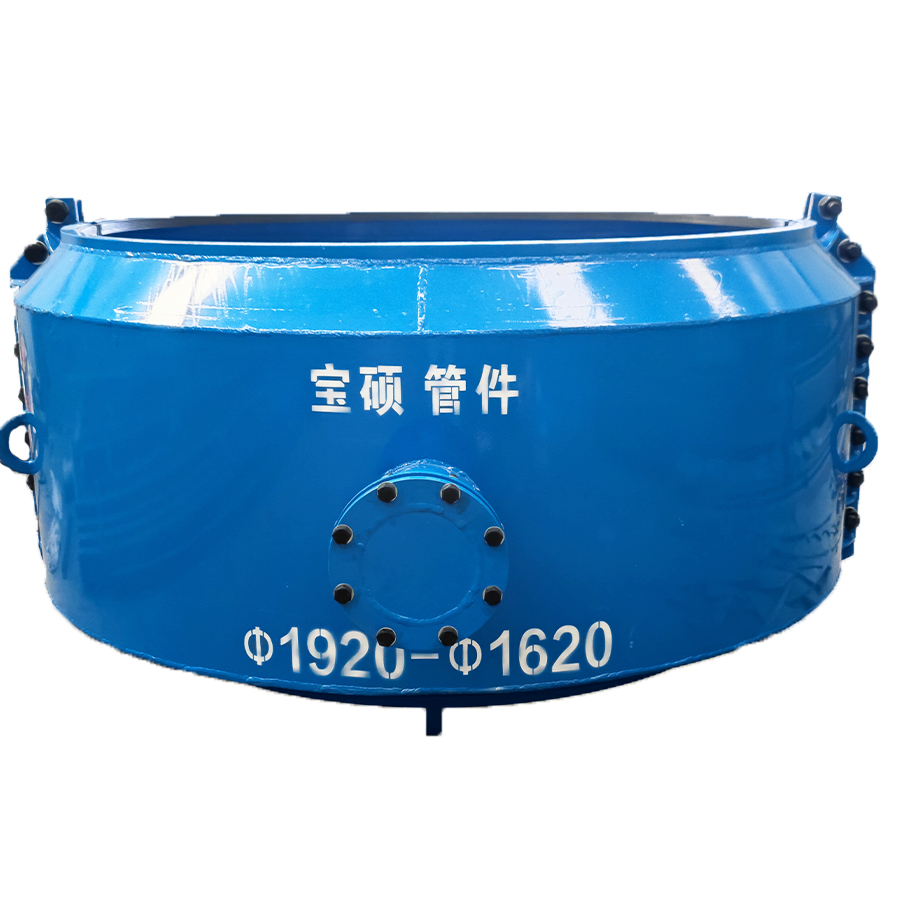
Summary
For leaking tees in utility system pipelines on offshore platforms, a 316 stainless steel tee repair clamp is the preferred solution, offering superior safety, reliability, cost-effectiveness, and efficiency. It perfectly avoids the significant risks of hot work at sea and enables rapid, durable, and corrosion-resistant repairs, minimizing production disruptions. It is an essential and critical piece of equipment for offshore maintenance.


